February 27, 2026
5 min read
Stitching Wellness into Every Day
“For me, it’s a game. It’s a puzzle. I have all the pieces, but I have to make the picture.”
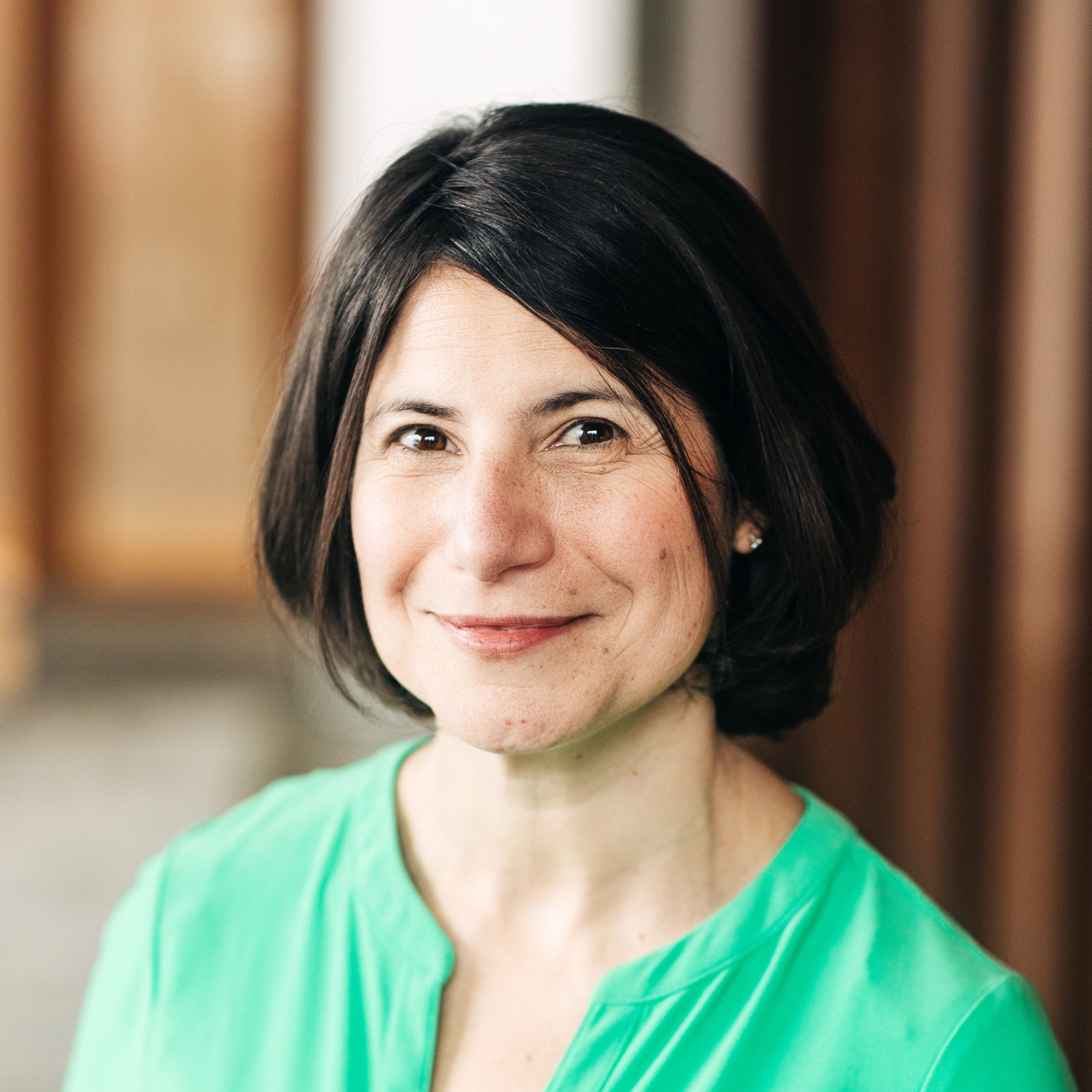

Carol has been awake since before 6, having started her morning with a single espresso and a bit of homemade granola. At 7am, she slips into the heated pool and begins her rotation through all four strokes—freestyle, breaststroke, backstroke, butterfly.
Forty minutes later she is standing at the sewing machine in her 12th-floor studio, surrounded by quilting materials—fabrics of every imaginable pattern and color, spools of thread, rolls of batting. Squares are already arranged on a nearby worktable, a puzzle waiting to be solved.
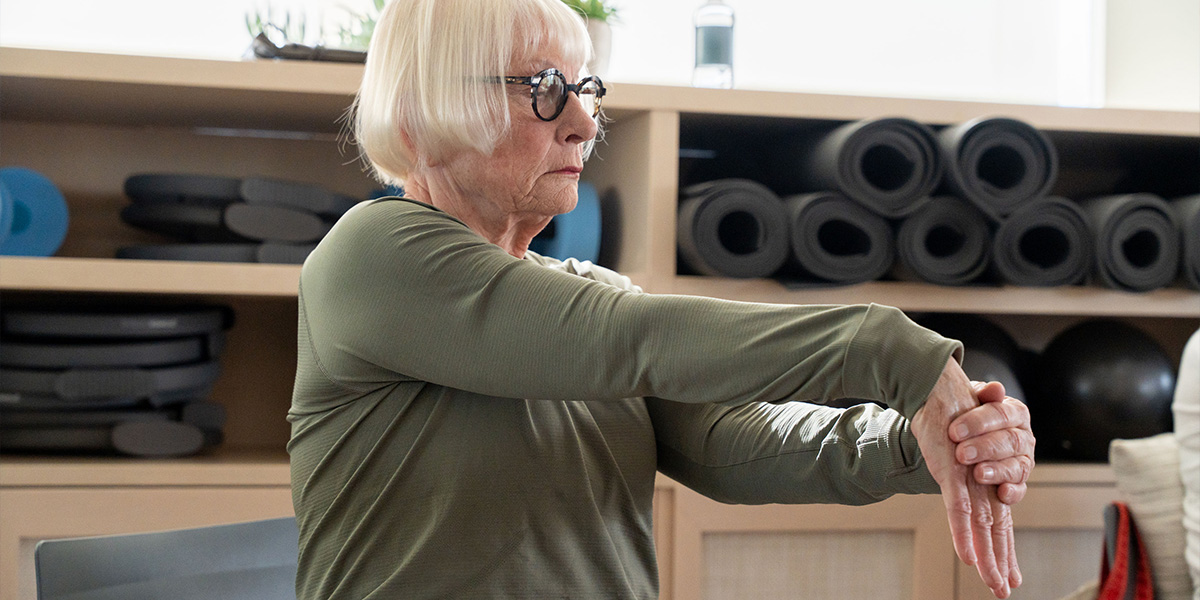
She’ll head downstairs at 10am for a fitness session—Strength and Posture with Katie, or Rory’s famously rowdy dance fitness class.
At 83, Carol has spent more than five decades proving that wellness is a practice that must be consciously stitched into each day. That practice has deep roots—in the Bay Area where she was born, in the art studios where she learned to weave, and in the water where she learned to swim.
Working with Scraps
Born and raised in San Francisco, Carol came of age in the 1960s—a time when the city was a laboratory for creative experimentation. Many women fiber artists were pushing their work beyond traditional craft categories and demanding space on museum walls. Carol set out to join them.
After spending her teens learning traditional weaving arts, she began her studies at Berkeley under renowned fiber artist Kay Sekimachi. Working with print textile scraps, Carol spent her days hand-stitching quilted wall pieces and soft sculptures featuring tiny fabric people.
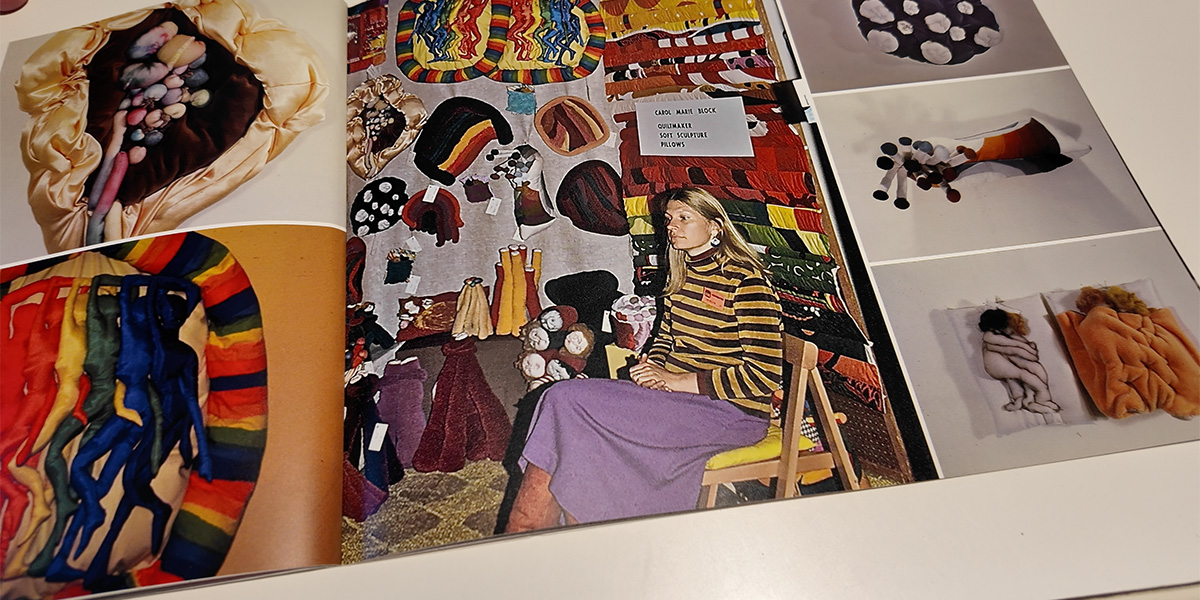
Before long, art dealers and museum curators began taking notice. Her work was soon being juried into prestigious craft shows where collectors and gallery owners from across the country visited her booths and placed orders. She even displayed her work in a one-woman show in Portland, Oregon.
Water and Movement
Throughout the 1970s, Carol built her fiber art practice in Oakland while raising a son and daughter with her husband, Gerald. Gerald ran a clinic for children with learning disabilities, and Carol worked alongside him.
Their marriage was built on a shared love of adventure. They lived in the West Marin mountains, surrounded by hiking trails. He learned to swim; she learned to ride a bike. They took kayaking trips in Alaska and bicycled across Europe.
As she approached her 40th birthday, Carol wanted to mark the milestone in a way that honored her San Francisco roots. She joined the Dolphin Club and trained as a master swimmer. “I discovered my competitive spirit,” she explains, eventually swimming the length of the Golden Gate Bridge. At 50, she completed the Escape from Alcatraz triathlon.
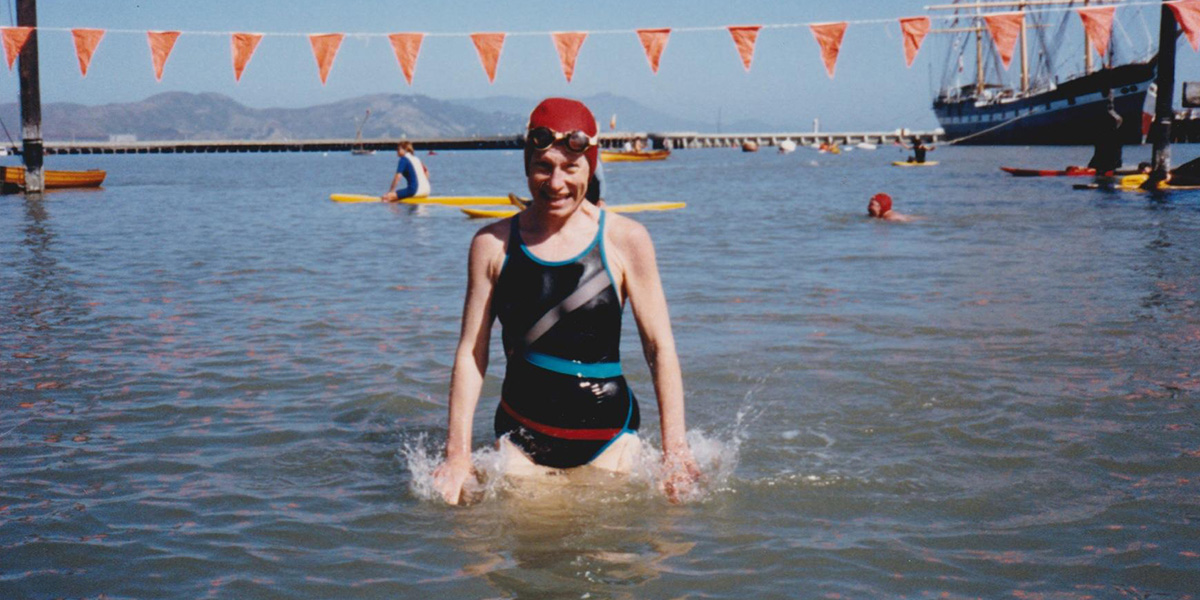
She was addicted. “I couldn’t live without water,” she says simply.
After 47 years of marriage, Gerald passed away in 2013. Though Carol has since stopped swimming in the bay, water remains central to her wellness routine; when she began looking for her next home, a pool was essential.
“That was why I chose Coterie.”
Finding the Right Space
In 2022, Carol had been watching Coterie’s construction from her condo eight blocks away. She followed the building’s progress as she walked the neighborhood and read about the project in the Chronicle. When the building opened, she took a tour. She put down a deposit on a studio residence—then changed her mind. “I wasn’t 80 yet,” she says. “There was a hesitancy.” She retrieved her deposit and went home.
Three years later, over lunch with her children, Carol mentioned she was considering Coterie again. Her son accompanied her on a visit the next day and, surprisingly, the same studio residence was available. It was empty this time, allowing Carol to envision exactly how she’d use the space.
Six weeks after moving in, she took a fall on a city street and broke her arm. “I never had a broken bone before, so suddenly, I got to experience the care that’s available here,” she says. The staff responded immediately, arranging care and regularly checking on her needs. When doctors told Carol to start exercising the arm, she ventured into fitness classes for the first time.
“I had not even thought of doing that,” she admits. “That opened my mind completely.”
The fitness center became a revelation—a vibrant social setting that she now attends nearly daily.
Sometimes her enthusiasm gets ahead of her, such as the time she did three downward dogs in yoga class, resulting in a pulled muscle behind her knee.
“I have a hard time thinking I am not Wonder Woman,” Carol laughs.
Making the Picture
Back in her studio, Carol has organized a compact production line. A worktable holds her cutting board and ironing station, and her desk accommodates the sewing machine. The pantry is stocked with donated fabrics—sheet remnants from a Swiss bedding store, vibrant Marimekko scraps—the same materials that fueled her work decades ago.
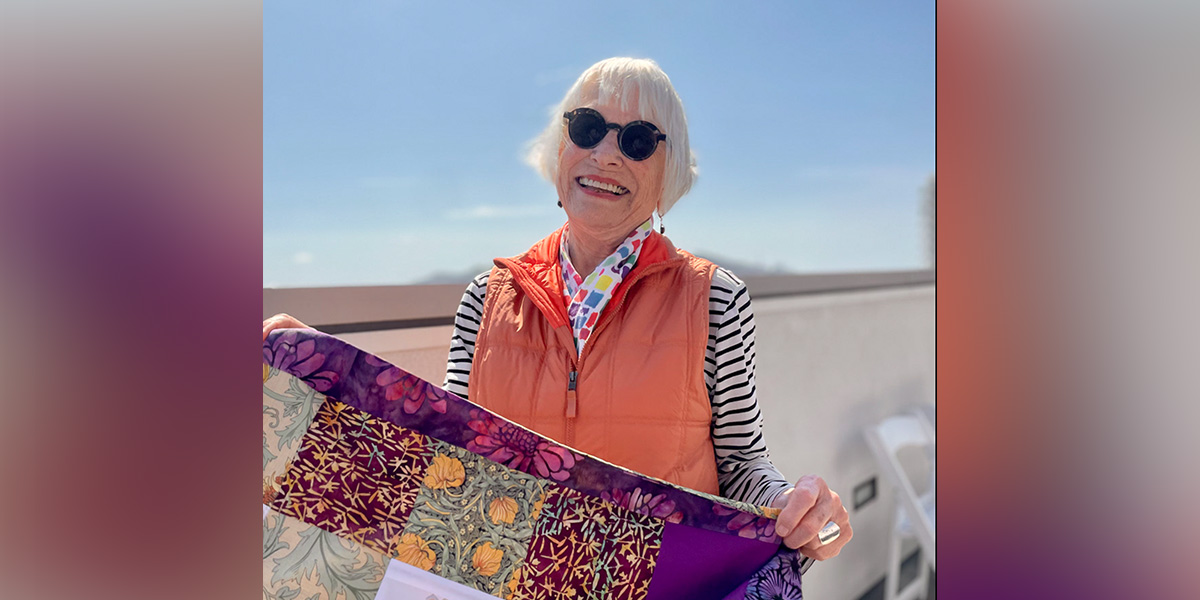
In just over two years, she’s completed more than 200 quilts, each one hand-delivered to a children’s hospital by her granddaughter, Zoe. The quilts are sized for hospital beds—30 by 40 inches, light enough for children to wrap up in. Each uses five-and-a-half-inch squares arranged into patterns designed to spark curiosity: vibrant color combinations or quiet designs with tiny birds to find.
“For me, it’s a game. It’s a puzzle,” Carol explains. “I have all the pieces, but I have to make the picture.”
A Community, Discovered
Carol came to Coterie for practical reasons: the pool, the fitness programs, the convenience. “I chose to come here in perfectly good health,” she says. “My exercise was walking the hills of the city and swimming in the Bay.”
Building a social circle wasn’t the goal. “I have plenty of friends and family nearby,” she explains.
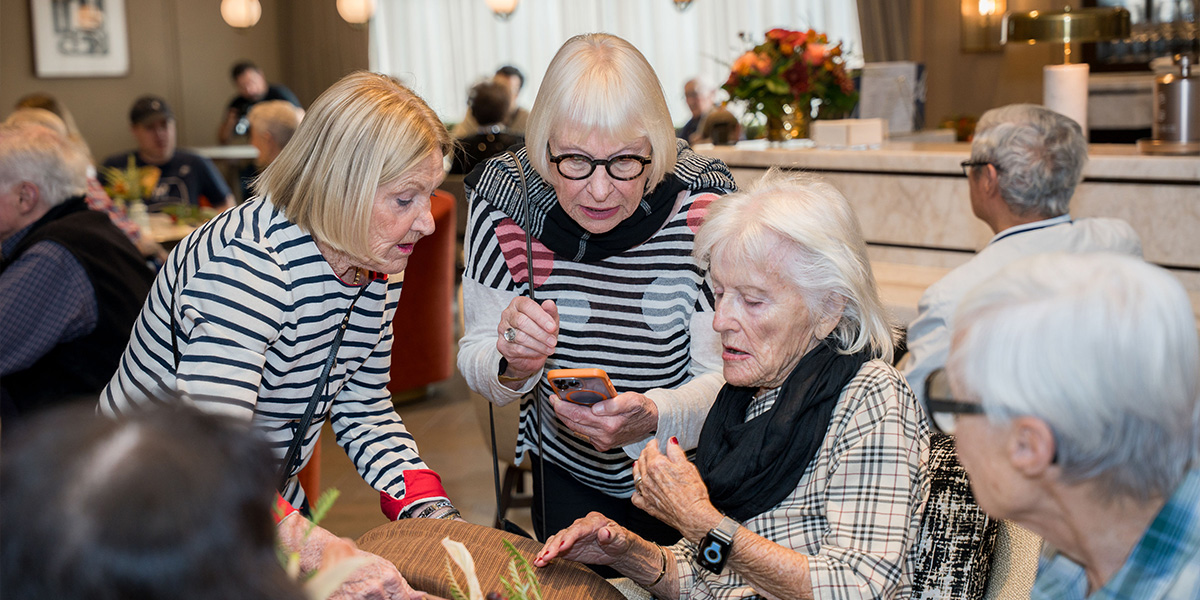
But wellness has social dimensions she hadn’t anticipated. “I have people who are very dear to me, and I would never have thought that would happen in such a short time,” she says now. Some friendships formed in the fitness center. Others developed through her quilting.
And she’s taken trips she wouldn’t have taken alone, including a wine tasting excursion to Sonoma with Coterie. “Four white-haired ladies,” Carol laughs. “It was so much fun.” The memory of them lined up at the tasting counter—Loma at 96, Barbara easily mounting the wine stool with her walker—delights her.
Maintaining her independence continues to be a daily practice. “As long as I have mobility, I will walk.” She still meets her son and daughter weekly for lunch in Berkeley. She writes postcards for political campaigns. She’s kept her membership at the Dolphin Club, where she once did those long-distance swims.
“How you live here is up to you,” Carol reflects. She’s chosen a life with room for both—the city she’s always known and the community she’s still discovering.
You might also like
Want to learn more about life at Coterie?