December 30, 2025
5 min read
The Scholar Who Found Her Calling in Memory Care
How Sandra redefines the idea of truly exceptional care

“I need something refreshing that moves.”
Most caregivers would hear this request from someone living with Alzheimer’s and ask for clarification: “Do you mean water?”
But when Memory Care Resident Engagement Specialist Sandra R. heard these words, she didn’t hear impairment. She heard poetry.
“She wanted a glass of water,” Sandra explains. “But the way that was expressed, and the gesture that accompanied it—it made me understand that there is a specific way of speaking that does not have to be diagnosed as language impairment.”
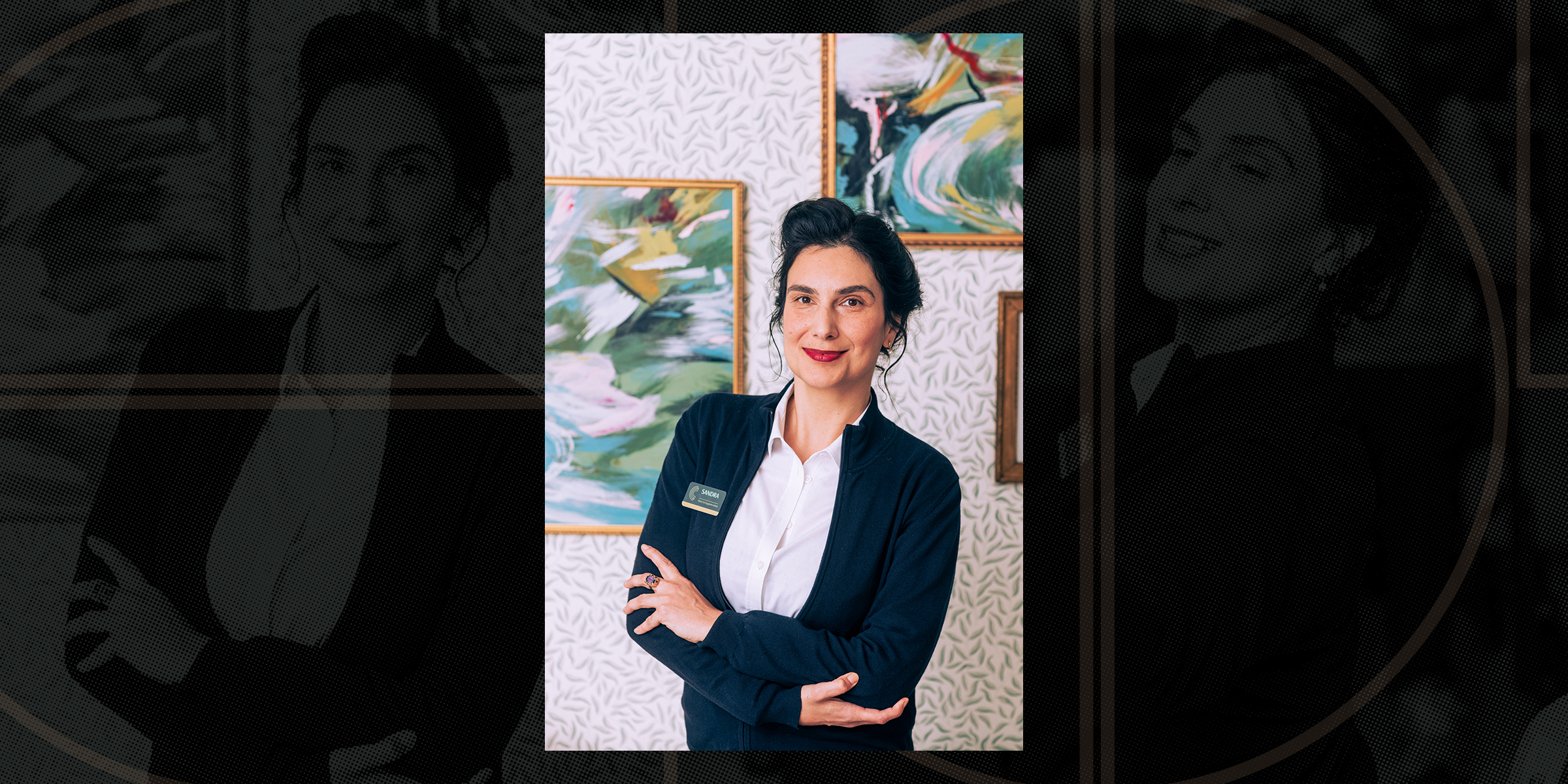
A PhD in literature might seem like an unlikely credential for memory care work. But for Sandra, it prepared her to better understand the residents she serves each day at Coterie in Hudson Yards.
Sandra’s Academic Path
Sandra was born in New York City and grew up in Zagreb, Croatia, during a time of intense conflict. “Yugoslavia was falling apart,” she recalls. “But I’m grateful for the experiences, especially for the history of the place.”
While other members of her family pursued careers in science, Sandra gravitated toward classical languages such as Latin and Greek, literature, and linguistics. Her doctoral research at Boston University focused on the Decadent Movement, a 19th-century literary phenomenon that examined the fall of the Roman Empire. French writers studied the breakdown of language during Rome’s collapse to explore similar anxieties about decline in their own time.
After completing her PhD, Sandra began applying for jobs while also studying dance movement therapy. One day she answered an ad from an agency seeking companions for people with early-stage dementia, and she was paired with Bridget—a 55-year-old museum CFO with Alzheimer’s who loved ballet.
They danced and attended ballet performances together, and as Bridget’s condition progressed, Sandra began connecting her research with the reality unfolding before her. She had spent years studying what societies do when faced with irreversible decline. Now she was witnessing her client’s own decline.
Bringing Theory to Life
When Coterie Hudson Yards opened in 2023, Sandra joined as a Memory Care Engagement Assistant. Her decades of study uniquely equipped her to honor the intellectual needs of people experiencing cognitive decline.
“I was talking to one of our residents who hadn’t spoken clearly in three months,” Sandra remembers. “We were reading a 16th-century map, and there was the Latin word pugna. Nobody in the group knew what it meant. Then this gentleman—a Yale-educated lawyer, looks at me and says, ‘Battle!’ He was able to dig that from inside.”
The resident’s family later confirmed what Sandra had suspected: He had been a classical scholar.
“It’s useful to have somebody in a care setting who can dig into these memories of early childhood when they were doing Latin and Greek,” Sandra reflects. “I can connect on that level. And I don’t think many people can.”
Another resident, an opera enthusiast with advanced Alzheimer’s, was half-asleep when Sandra showed him a painting from an art session—a ship on stormy seas.
“He opens his eyes and says, ‘The Flying Dutchman,’” Sandra recalls, referring to Wagner’s opera. “It could have been any random ship, but he clearly identified that as The Flying Dutchman. I was just so amazed, and I laughed, and he understood that I got his joke. That’s how we roll here.”
These moments point to Sandra’s unique ability to recognize that highly educated residents still live in a world of ideas, mythology, and culture—even when they can’t quite remember what they had for breakfast.
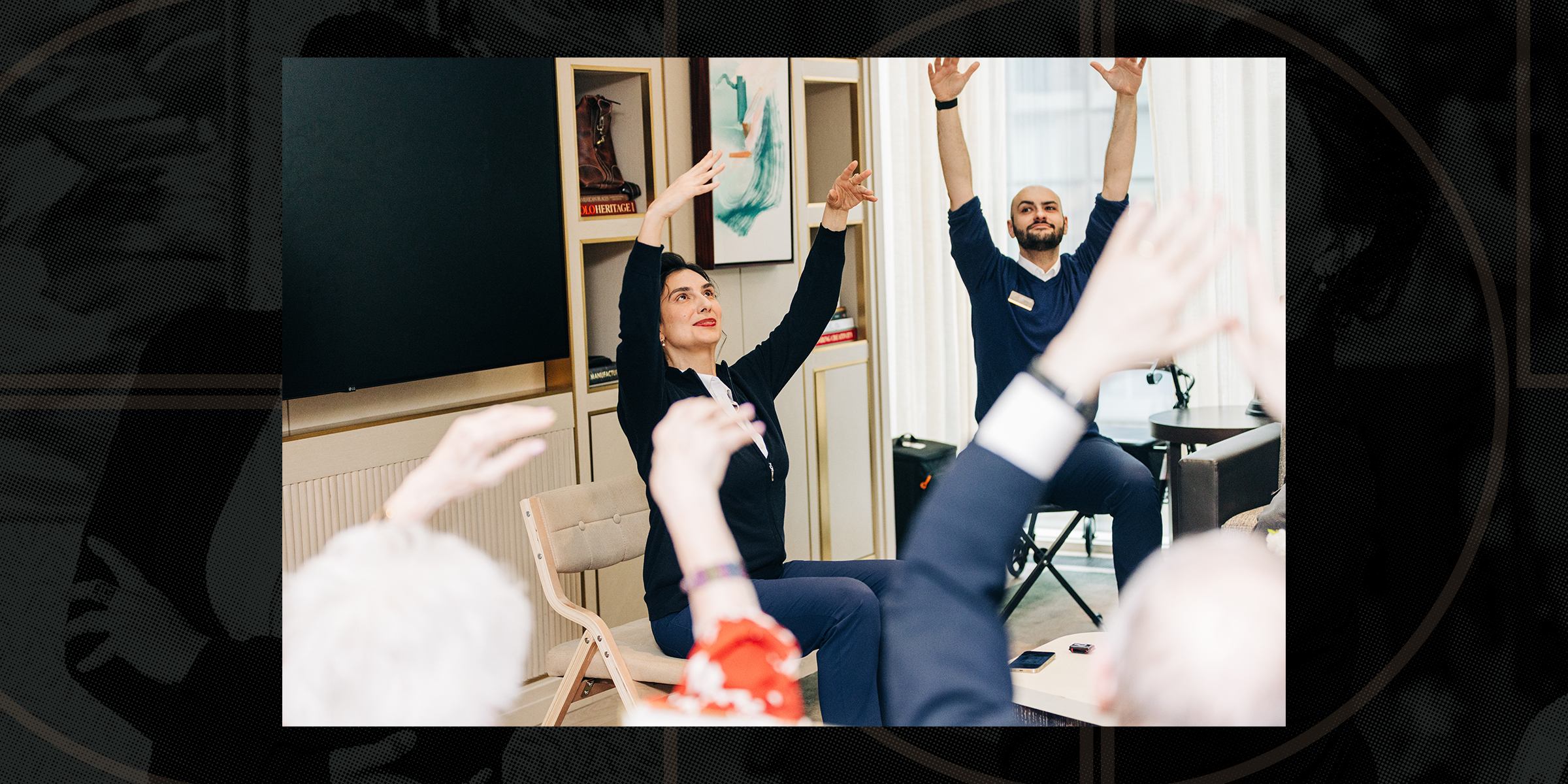
Her dance training also surfaces in the movement sessions she guides.
“I watch how residents naturally move,” she explains. “If somebody’s doing this”—she stretches her arms outward—“I say, ‘Let's all put our arms together.’ When we share movement with the group, it becomes a common experience we can refer to throughout the day. I’m not imposing choreography from above. I’m observing and sharing.”
The Work Continues
With her PhD and specialized training came a certain sense of responsibility. Sandra reflects, "For a long time, my question was, what do I do with it? How do I bring it to life?”
The answer, it turns out, is simple: You listen. You validate. You find the poetry. You meet people where they are. You become fluent in the language of decline—and you teach others to hear the beauty in it too.
Sandra oversees memory care engagement programs at Coterie in Hudson Yards and holds a PhD in 19th-century French literature from Boston University. She recently co-authored an article exploring language and Alzheimer’s residents, as well as the use of Graphic Medicine in a memory care setting.
You might also like
Want to learn more about life at Coterie?